
Inside D1 Athletes' Travel: Restrictions & Reality
College Athletics, D1 Athletes, Travel Restrictions, Game Day Experience, Sports Parenting, Team Travel Policies
Inside the Road Life of D1 Athletes: Travel Restrictions and Game Day Reality
For many families, College Athletics looks glamorous from the stands or on TV: charter buses, packed arenas, and big moments under bright lights. But for D1 Athletes and the parents who support them, the story behind those game days is far more structured, shaped by evolving travel restrictions and detailed team travel policies that aim to balance performance, safety, and student well‑being.
How Travel Restrictions Shape the Season
At the Division I level, travel isn’t just about getting from point A to point B. NCAA rules and institutional guidelines set clear travel restrictions designed to protect student‑athletes’ health, academics, and competitive fairness. In 2026, one of the most important changes is a Division I blanket waiver that allows certain travel days to count as the team’s required day off, as long as strict conditions are met (ncaa.org).
When a team competes away from home and crosses time zones, that return‑trip day can now qualify as a rest day if the team gets back before noon, travel is the only athletically related activity during that window, and the school then provides 24 continuous hours off. In practice, this means fewer late‑night film sessions or early lifts after long trips, and more protected recovery time built into the calendar. For parents, it’s a reassuring sign that College Athletics is acknowledging fatigue and mental health, not just wins and losses.
Other proposed shifts—like loosening ground transportation limits in non‑championship segments for sports such as soccer and softball—could give coaches more flexibility to schedule regional opponents without overloading athletes with marathon travel days (ncaaorg.s3.amazonaws.com). These changes may sound technical, but they directly affect how often athletes miss class, how much time they spend on buses, and how rested they are when game day arrives.
What Team Travel Policies Really Look Like
Behind every road trip is a thick packet of team travel policies. These outline who travels, how expenses are covered, and what athletes can and cannot do on the road. At championship events, the NCAA even sets formal “travel party” limits and reimbursable costs. For example, recent basketball championship memos cap the reimbursable travel party at around 75 people, with strict rules on extra passengers, equipment weight, and what counts as a covered expense (ncaaorg.s3.amazonaws.com).
For regular‑season trips, schools typically follow NCAA bylaws that allow transportation, lodging, meals, and a modest daily incidental allowance—often around $20 per day—for things like snacks or toiletries. Cash handouts beyond that are prohibited, and even small extras are tightly regulated to avoid violating amateurism rules. Local rides to the airport or train station, or reasonable entertainment such as a team movie night, are allowed as benefits incidental to participation (web3.ncaa.org).
📌 Key Takeaway: Team travel policies are designed to cover the basics—safe transportation, meals, and lodging—without turning road trips into paid vacations.
A Game Day Experience Built Around Routine and Recovery
For D1 Athletes, the Game Day Experience starts long before the opening whistle. On the road, it often begins in a hotel ballroom turned makeshift meeting room, with a team breakfast tailored to performance nutrition and a walk‑through or film session. Many programs now lean on wearable technology and even virtual reality to rehearse plays and visualize key moments, a trend the NCAA has highlighted in its look at the future of college sports (ncaa.org).
Once at the venue, athletes move through a carefully scripted routine: taping, warm‑ups, position meetings, and quiet time to mentally lock in. Smart devices track workloads to avoid over‑doing it in pre‑game, while coaches and sports performance staff watch real‑time data to guide substitutions and strategy. From the stands, it looks like pure adrenaline; from the athlete’s perspective, it’s a series of planned checkpoints designed to create consistency in unfamiliar environments.
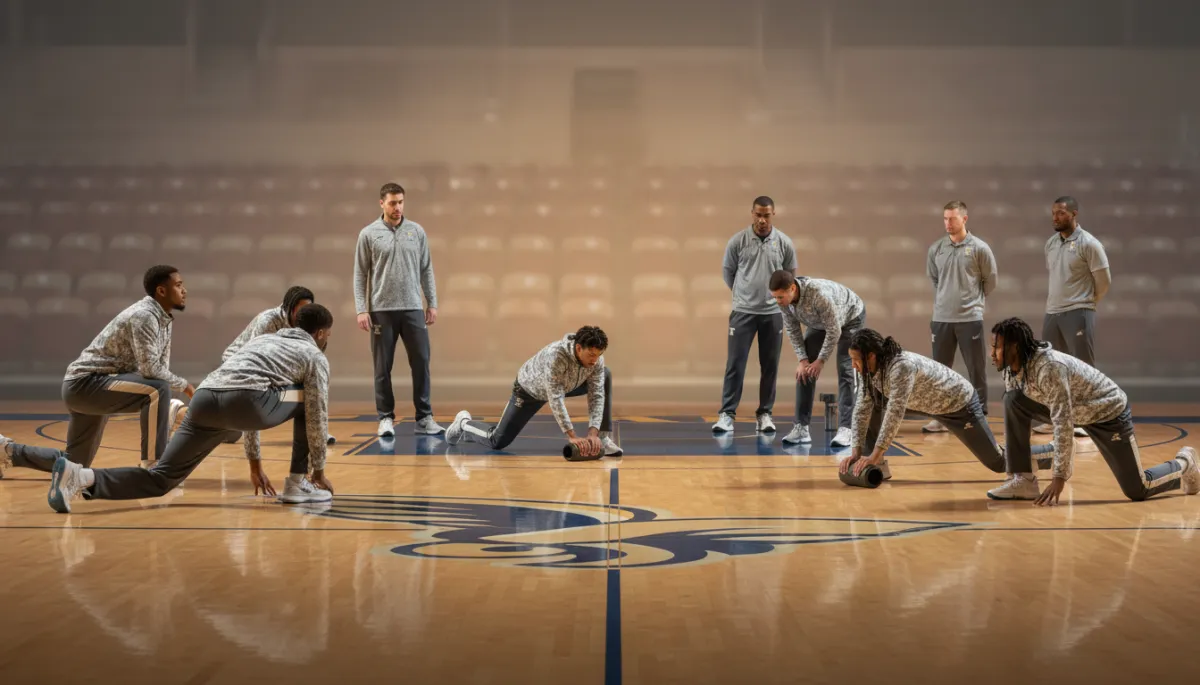
Structured warm-ups and routine help D1 athletes perform consistently in unfamiliar arenas.
After the final buzzer, the Game Day Experience keeps going. There may be quick media responsibilities, a post‑game meal, and then a late‑night bus or flight home. Here, the 2026 travel‑day waiver matters: instead of rolling straight into another mandatory workout, athletes are more likely to receive that protected 24‑hour window to sleep, catch up on schoolwork, and mentally reset before the next challenge.
What Sports Parenting Looks Like in a Travel-Heavy World
For families, understanding these dynamics is a crucial part of modern Sports Parenting. Parents of prospective D1 Athletes often imagine frequent weekend trips to watch games, but travel restrictions and team itineraries can make spontaneous visits difficult. Athletes may travel on tight schedules, with limited free time and curfews that leave little room for extended family dinners or sightseeing on the road.
The best support often comes from respecting the structure: knowing that your student‑athlete might be unavailable for long phone calls on travel days, or that a post‑game conversation may have to wait until they’re back at the hotel. Parents can also ask coaches and compliance staff during recruiting visits how their program handles missed classes, rest days, and mental health support around travel. Those answers reveal as much about a program’s culture as its win‑loss record.
💡 Pro Tip for Parents: When evaluating College Athletics programs, ask current players how travel feels in reality—exhausting, manageable, or well‑supported.
Helping Athletes Thrive on the Road
College Athletics will always involve long bus rides, airport delays, and late‑night arrivals—that’s part of the deal at the Division I level. But with evolving NCAA travel restrictions, clearer team travel policies, and growing awareness of athlete wellness, the road life of D1 Athletes is slowly becoming more sustainable. For families, understanding how those rules work behind the scenes can turn anxiety into informed support and help your athlete navigate the demanding, unforgettable Game Day Experience that comes with competing at the highest collegiate level.
📌 Ready for the Next Step? If you want ongoing guidance as you walk through recruiting, travel, and the Game Day Experience with your athlete, make sure you’re plugged in:
Stay in the loop:Sign up for our blog to get new posts, NCAA updates, and real‑life road stories from D1 families delivered straight to your inbox.
Get personal support:Book a one‑on‑one call with MamaHen to talk through your specific questions about travel, schedules, recruiting, or how to support your student‑athlete without adding pressure.
💬 Your Game Plan: Don’t try to figure this all out alone. Use the links on this page to join the blog list and schedule your session with MamaHen so you and your athlete can head into every road trip feeling prepared, informed, and supported.